


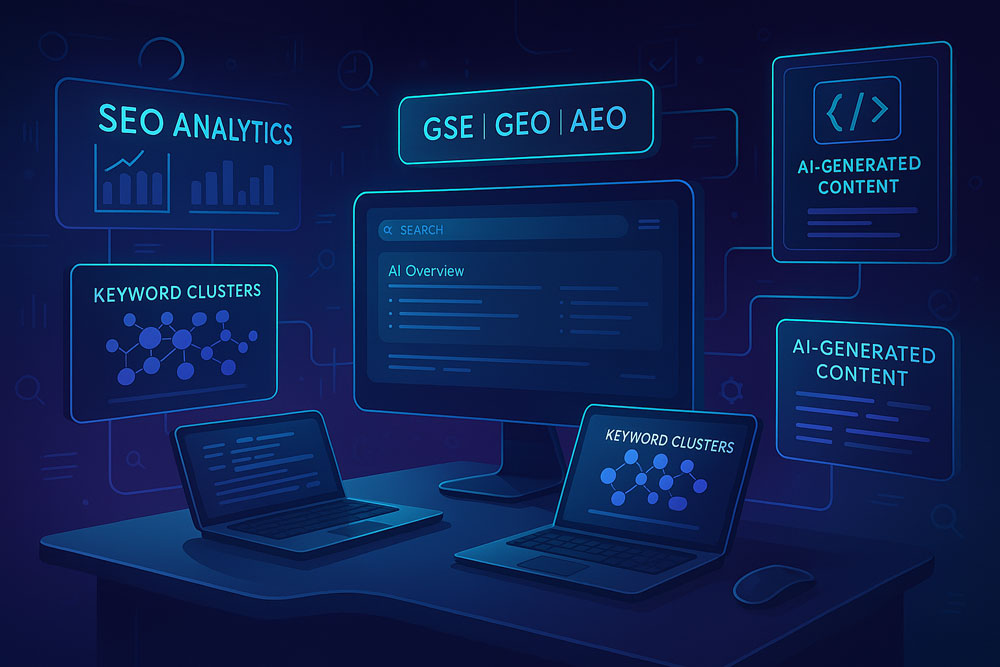
Search Engine Optimization (SEO) has come a long way from keyword stuffing and backlink chasing. In 2025, we’re playing in a completely different arena—one ruled by AI overviews, generative search, and an evolving focus on user experience and semantic relevance.
Whether you’re a digital marketer, entrepreneur, blogger, or SEO specialist, this checklist will help you dominate search results by aligning with the latest trends like GSE (Google Search Experience), GEO (Generative Experience Optimization), AEO (Answer Engine Optimization), and AI-assisted content.
Let’s dive in.
Learn SEO, GEO, and SGE: Master the Future of Digital Visibility with Naved Khan
1. Keyword Research in the AI Era
Keyword research is still the backbone of SEO, but the rules have evolved.
- Use tools like Ahrefs, SEMrush, Google Keyword Planner, and AlsoAsked to understand real user queries.
- Focus on long-tail keywords, question-based searches, and semantic variations.
- Think like an AI: Optimize for topics, not just keywords.
- Cluster keywords based on search intent (informational, transactional, etc.).
- Include terms found in AI overviews and People Also Ask sections.
2. GSE, GEO & AEO: Your New SEO Allies
2025 is the year we optimize not just for Google’s search index—but for its AI brain.
What is GSE & GEO?
- GSE (Google Search Experience) is about how Google presents content in AI overviews.
- GEO (Generative Experience Optimization) focuses on optimizing content that AI uses to generate answers.
How to Optimize:
- Structure content with clear sections and headers—AI loves well-organized data.
- Use FAQs, bullet points, pros & cons, and summary tables.
- Add E-E-A-T elements: author bios, real experience, citations.
- Refresh content with current data and answers that match user intent.
AEO (Answer Engine Optimization)
- Write in natural, conversational language—think voice search.
- Use Q&A formatting to increase chances of AI snippets.
- Implement schema markup (FAQ, How-To, Review, Product).
- Answer the question in the first few sentences of your page or section.
3. Technical SEO: The Silent Superpower
Your site needs to be as technically sound as it is content-rich.
- Mobile-first and responsive design.
- Optimize for Core Web Vitals (LCP, FID, CLS).
- Submit updated XML sitemap and robots.txt.
- Fix crawl errors in Google Search Console.
- Implement structured data for all rich content formats.
4. On-Page SEO That Works
On-page SEO is still about doing the basics—but better.
- Use unique, keyword-rich Title Tags and Meta Descriptions.
- Keep URLs short, clean, and descriptive.
- Use alt text for all media elements.
- Interlink strategically to boost authority and crawlability.
- Use named entities and semantic context to aid AI interpretation.
5. Content Strategy + AI: The Perfect Blend
AI can assist—but not replace—human content strategy.
- Use tools like ChatGPT, Jasper, or Surfer SEO to draft or outline.
- Double-check facts, data, and relevance—Google penalizes AI spam.
- Showcase real experience: case studies, client stories, expert quotes.
- Refresh content every 3-6 months with new stats and links.
- Target Featured Snippets and AI overviews with clear, concise answers.
6. Link Building & Brand Mentions
Backlinks still matter—but brand mentions matter too in the age of AI.
- Build links from topically relevant, high-authority sites.
- Get featured in niche publications, PR, or HARO.
- Track unlinked brand mentions—they contribute to entity recognition.
- Monitor and disavow toxic links.
- Use tools like Ahrefs or SEMrush for backlink audits.
7. Local & Hyperlocal SEO
If you serve a physical location, local SEO is your best friend.
- Optimize your Google Business Profile.
- Collect and respond to reviews frequently.
- Use location-based schema markup.
- Maintain consistent NAP (Name, Address, Phone) across all directories.
- Build local content: area pages, service zones, local blogs.
8. Multilingual & International SEO
Global presence? Think global and local.
- Use hreflang tags for each language/region.
- Adapt—not just translate—your content for cultural nuances.
- Research regional search behavior and search engines.
9. Performance Tracking & Analytics
What gets measured gets improved.
- Set up Google Analytics 4 (GA4) and Google Search Console.
- Track keyword performance, AI overview visibility, and engagement metrics.
- Monitor interactions: scroll depth, time on page, CTA clicks.
- Create dashboards using Looker Studio for reports and insights.
10. Monthly SEO Maintenance & Automation
SEO is never a one-and-done task.
- Run monthly SEO audits with Screaming Frog or Sitebulb.
- Update your plugins, themes, and CMS.
- Fix broken links, redirect errors, and 404 pages.
- Refresh stale content and prune irrelevant pages.
- Automate reports, alerts, and performance updates.
Bonus: Future-Proof Your SEO Strategy
These are the trends shaping SEO beyond 2025:
- Optimize for AI snapshot/overview appearances.
- Focus on conversational content for chat-based search.
- Build your brand’s knowledge graph across platforms.
- Invest in original thought leadership content.
- Create content designed for voice assistants and smart devices.
Learn SEO, GEO, and SGE: Master the Future of Digital Visibility with Naved Khan
SEO in 2025 is no longer about gaming the system—it’s about serving the user through AI-friendly, experience-rich content.
If you check off every item on this list, you’re not just ranking higher—you’re becoming the go-to source in your niche.

















Leave a comment